
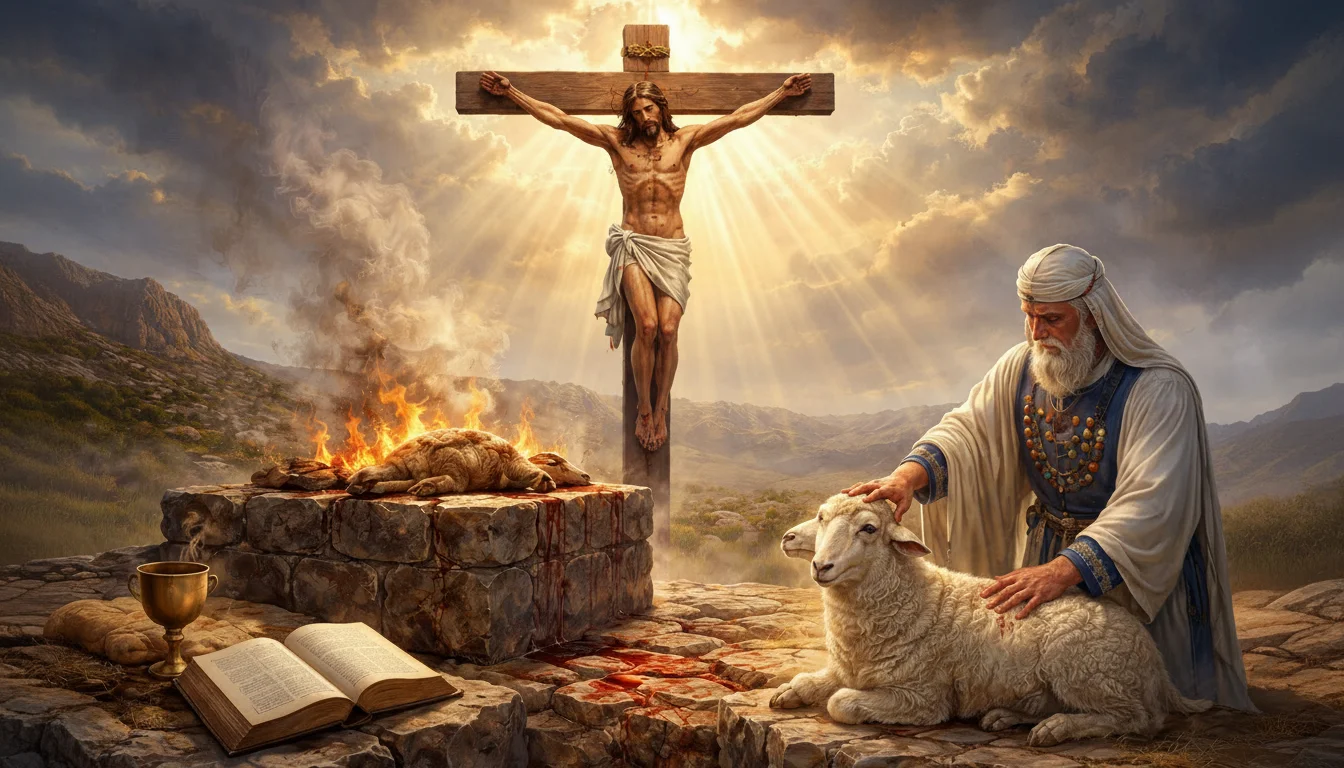
Biblical Background
The concept of atonement is deeply rooted in the unfolding story of Scripture. In the Book of Genesis, after Adam and Eve sinned, God made garments of skin to clothe them, hinting at the first shedding of blood and establishing the principle that sin requires covering. As God formed His covenant with Israel, the system of sacrifices was clearly defined in the Book of Leviticus, where offerings and the shedding of blood symbolized purification and reconciliation with a holy God. The Day of Atonement (Yom Kippur), described in Leviticus 16, became the central annual event when the high priest entered the Most Holy Place to offer sacrifice for the sins of the nation.

Spiritual Interpretations
Atonement as Substitution
A central spiritual meaning of atonement is substitution. In the Old Testament system, an innocent animal bore the penalty of sin in place of the guilty person. This foreshadowed Christ’s sacrifice, where He took humanity’s punishment upon Himself.
Atonement as Reconciliation
Sin creates spiritual separation, but atonement restores relationship. Through reconciliation, believers are brought back into fellowship with God, no longer alienated but accepted and loved.
Atonement as Cleansing
Atonement also signifies purification. Sin defiles, but God’s provision cleanses the heart and conscience. This cleansing brings spiritual renewal and peace.
Atonement as Redemption
Redemption means being bought back from bondage. Through atonement, believers are freed from the power and penalty of sin and restored to spiritual freedom.
Examples or Variations
The Passover Lamb
During Israel’s deliverance from Egypt in the Book of Exodus, the blood of the lamb protected the Israelites from judgment. This event foreshadowed Christ’s sacrificial role as the Lamb who takes away sin.The Scapegoat on the Day of Atonement
In the Book of Leviticus, on Yom Kippur, one goat was sacrificed and another symbolically carried the sins of the people into the wilderness. This illustrated both forgiveness and the removal of guilt.Christ’s Sacrifice on the Cross
The Epistle to the Hebrews explains that Christ’s sacrifice was once for all, unlike repeated animal offerings. His atonement was complete and eternal.Justification by Faith
The Epistle to the Romans teaches that believers are justified by faith. Atonement becomes effective when received through trust in Christ.
Dealing with Negative Signs or Troubling Dreams
Struggles With Guilt
Some believers struggle with lingering guilt even after accepting forgiveness. Atonement assures that sin is fully forgiven through Christ.
Fear of Not Being Worthy
Atonement is not based on human worthiness but on God’s grace. Salvation is a gift, not a reward for perfection.
Confusion About Forgiveness
If doubt arises, return to Scripture. God’s promise of forgiveness is firm and reliable. Trust His Word over feelings of condemnation.
Faith-Based Guidance
Accept the Gift of Grace
Atonement must be personally received. Embrace God’s forgiveness through faith in Jesus Christ.
Live in Gratitude and Obedience
True understanding of atonement produces gratitude and a desire to live in obedience to God.
Prayer of Thanksgiving
You may pray:
“Lord, thank You for providing atonement through Jesus Christ. Help me fully trust in Your forgiveness and walk in the freedom You have given me.”
Share the Message of Reconciliation
Since atonement restores relationship with God, believers are called to share this message of hope with others.